A statement by Friends of Gippsland Lakes Inc.
We welcome Resi Ventures’ acknowledgment of the kangaroo deaths at 10 Fullarton Drive in Paynesville, and the opening of corridors through the fencing. Both are significant.
The National Environmental Protection Agency has stated publicly that the approval requires temporary fencing to protect Latham’s Snipe during construction, that the approval does not detail a specific type of fencing, and that the agency is working with the approval holder to identify alternative fencing that meets both the state and Commonwealth requirements while reducing impacts on wildlife. We welcome that engagement. Three things follow from it.
First, the requirement the regulator describes attaches to construction, and construction has not started. It cannot lawfully start while Latham’s Snipe are present, and they are here now. Second, while the conditions do not specify a fence type, they require the fencing to comply with the developer’s own management plans, and those plans are specific. Third, the state permit’s requirements apply alongside the Commonwealth’s, as the regulator has confirmed.
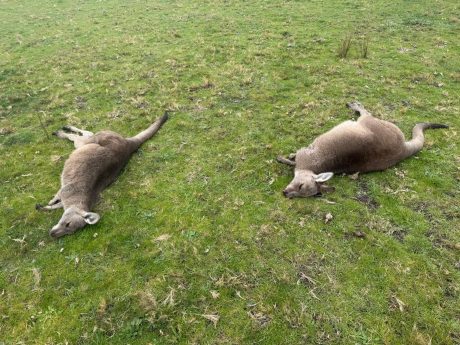
The developer says the fencing was “configured in accordance with the approved management requirements”. Two documents set requirements for fencing on this site, and neither describes the fence in the photographs. The Mammal Management Plan, prepared by the developer’s own ecologist at Council’s request in 2023, is the document that addresses kangaroos directly. It requires exclusion fencing of chain-link or deer mesh, at least 1.9 metres high, “completely free of holes/gaps within and under the fence to prevent attempted escape or injury”, with the base closed by an apron, embedding, grading or footing, and the top marked with coloured tape, piping or tags so animals can see it.
The Environmental Management Plan, which the Commonwealth approval expressly imports, deals with construction zone fencing of the offset area. It requires a barrier impermeable to sediment fixed to the fence, “No-Go” signage at regular intervals, and repair of any gaps in or under the fencing within 24 hours.
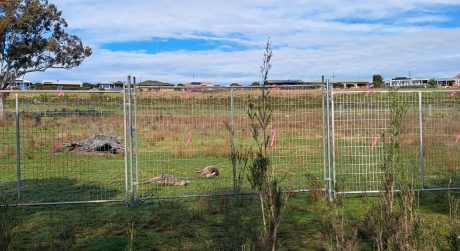
Dated photographs show plain mesh with open gaps at the base (some wide enough for large male kangaroos), ineffectual pink ribbon markings and no sediment barrier – from installation in August until the openings were made on 27 August. The developer also says kangaroos “gained access” and became trapped. A fence built to either specification is a fence animals cannot get under. That single defect worked at both ends: it is how animals got in, and how they died trying to get out.
There is a question about which fence this is, and the developer’s own documents give two answers. Its published construction plan describes the fencing along the Ramsar boundary as vegetation protection, aligning with “the TPZ of retained trees and patch no-go zones”. If that is what it is, its timing is not in question, but the Mammal Management Plan’s specification governs how it should have been built, and the fence does not comply with that specification. We understand the explanation given to Council is different: that this is the offset-site fencing required by condition 18. That fencing is scheduled to go up while the stormwater basin and swales are under construction, and those works have not been approved, let alone being built. On that answer, the sediment barrier, the signage and the 24-hour repair obligation applied from the day it went up. On either answer, the fence should not look like the one in the photographs, and we think the developer should say which fence it is.
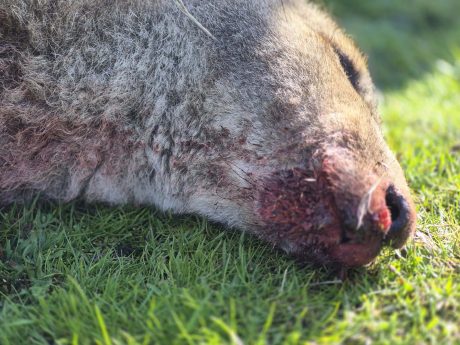
The Mammal Management Plan also sets out what to do when a kangaroo is inside the fenced area: report it, let it leave of its own accord, find where it entered, and widen that entry point so it can get out. It requires daily checks for defects or breaches. The fence was installed from about 10 August and completed within days; residents report the openings were created on 27 August. Eight animals died in between. Opening the fence was both the right thing to do and the developer’s own documented remedy, available from the first day.
We understand an ecologist was engaged. The question then is not whether one was involved, but what they were asked to certify. We invite the developer to publish the clearance certification: who gave it, on what date, and against which plan. The construction plan that governed the fencing stage never references the Mammal Management Plan at all, and no ecologist could certify compliance with a plan the works documents did not adopt.
That published construction plan is two pages. It rates significant flora and fauna as “Unlikely / Moderate”, the same rating it gives to dust, noise and erosion, and the measures under that heading address vegetation demarcation, protection-zone access and site inductions. The only fauna named in it is Latham’s Snipe. There is no reference to mammals, to kangaroos, or to the Mammal Management Plan. The Commonwealth approval requires the plan to include “incident management procedures, corrective action reporting and contingency planning”. Neither the Offset Management Plan nor the Environmental Management Plan appears on the developer’s website as the approval requires. The Construction Environmental Management Plan (CEMP) – Stages 1 & 2, itself appeared in August, some seven months after the approval’s deadline.
The CEMP also calls this fencing “Stage 1” of the works program, with civil works at Stage 3 under a separate plan. The planning permit requires a Construction Management Plan, approved by Council that includes “management of mammals” before any works associated with the subdivision start. The Commonwealth’s requirements do not displace Council’s. The permit stands on its own terms, and condition 24 is one of them.
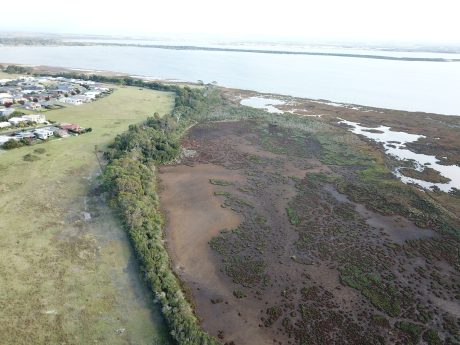
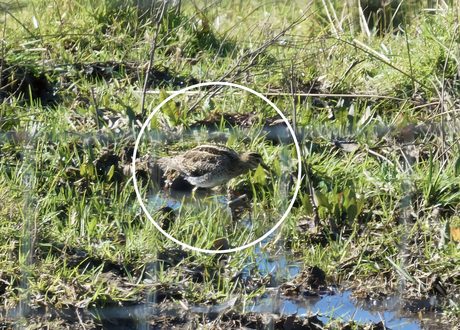
There is a further point about what the fencing is said to protect. The regulator describes its purpose as protecting Latham’s Snipe (pictured below) from unauthorised access and disturbance; the developer’s construction plan describes the same fencing as aligning with tree protection zones and patch no-go zones. Latham’s Snipe habitat on this land is damp open ground, grassland and bracken, not the retained tree patches. We have asked the regulator to clarify which areas the fencing is intended to protect, and whether its alignment corresponds to snipe habitat, to the offset area, or to retained vegetation?
As it now stands, the open fence satisfies none of the objectives in any of these documents. It does not stop sediment, enclose the offset area, or prevent access. It is a hazard with holes in it. The sensible next step is to finish the job the developer began when it made the openings, and take the spikes and remaining panels away until the works actually require them.
Latham’s Snipe are now returning for the season (see snipe pictured above). They are present through the summer and generally depart around late February – March, and the approval bars commencement until an ecologist determines the birds have migrated and none remain. On the species’ migration cycle, that means works could not lawfully begin before autumn 2027 at the earliest. There is time to get the remaining approvals right, and no reason to rush them.
What the community asks:
- Take the fence panels down immeadiately until the works actually require them, and rebuild to the specification in the developer’s own documents when that time comes.
- Remove the post spikes and clear the fallen panels now. These are immediate hazards to wildlife, whatever is decided about the fencing.
- Collect the carcasses, which are decomposing and have been scavenged, and put a written protocol in place for any future deaths.
- Publish the outstanding management plans.
- Complete the approvals in the order the permit sets (the genuinely independent snipe habitat survey, the plans that follow from it, and a construction management plan that genuinely manages the wildlife) before any works begin.
The community has asked FOGL to consider an application to the Victorian Civil and Administrative Tribunal for an enforcement order under section 114 of the Planning and Environment Act to ensure the permit conditions we fought for are honoured. Any such application would concern the permit holder’s compliance, not Council, whose processes we support. We would far prefer the conditions simply be met. Every step the developer takes toward that makes enforcement unnecessary.